
Introduction
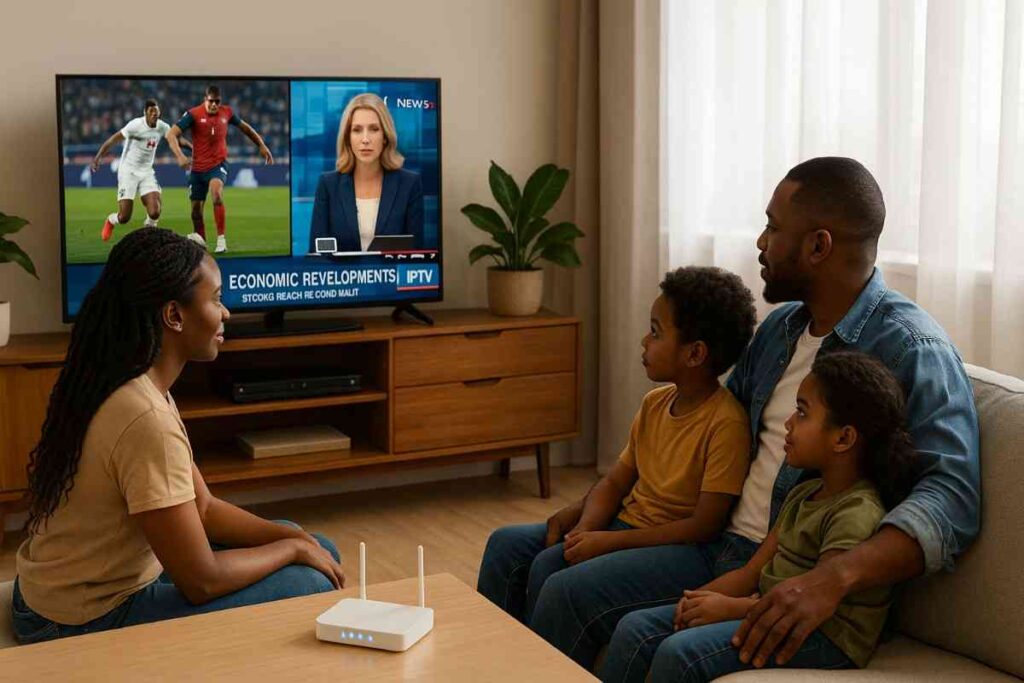
South Africa’s television landscape is evolving rapidly. Faster internet speeds, improved fibre coverage, and affordable smart TVs have opened the door to a new entertainment era known as IPTV South Africa. Internet Protocol Television (IPTV) allows you to stream live and on-demand channels over the internet instead of using satellite or cable.
In this context, reliable providers are essential — and platforms like LiveFern.Store are helping South African viewers experience stable, legal, and high-quality IPTV streaming. Whether you are in Cape Town, Johannesburg, or Durban, IPTV provides more flexibility, better pricing, and access to both local and international channels.
This guide explores what IPTV is, why it’s booming in South Africa, how to choose the right provider, and how to enjoy legal, buffer-free viewing in 2025.
What Is IPTV?
Definition
IPTV (Internet Protocol Television) delivers television and multimedia content via broadband networks instead of traditional satellite or cable. Streams are transmitted in data packets — the same technology that powers the web.
According to Wikipedia, IPTV combines live broadcasting, video-on-demand, and catch-up features, allowing viewers to control what and when they watch.
How It Works
- Source Acquisition: The IPTV provider obtains broadcasting rights and channel feeds.
- Encoding: Content is compressed for online delivery.
- Distribution: Streams are transmitted through high-speed servers.
- Playback: Users access channels using apps, smart TVs, or web browsers.
Why IPTV Is Gaining Popularity in South Africa
Affordable and Accessible Entertainment
South Africa’s broadband infrastructure is improving every year. Fibre networks have expanded to millions of homes, making IPTV accessible beyond urban centres. Viewers can enjoy thousands of channels without expensive satellite equipment.
Key Growth Drivers
- Fibre rollout in Gauteng, Western Cape, and KwaZulu-Natal.
- Affordable devices like Android TV boxes and smart TVs.
- Flexible monthly pricing instead of rigid contracts.
- Youth adoption — younger audiences prefer streaming over cable.
IPTV has become more than a trend — it’s a mainstream alternative to traditional pay-TV in South Africa. Many South Africans are now using trusted platforms such as LiveFern.Store for legal and seamless access to entertainment across all devices.
Advantages of IPTV
1. Flexible and Contract-Free
IPTV subscriptions are usually month-to-month with no decoder or installation. Cancel anytime without penalties.
2. Cost-Effective
Traditional pay-TV services often exceed R500 monthly. IPTV options range from R150–R300, with no hardware costs.
3. Multi-Device Access
Watch on:
- Smart TV
- Android Box / Fire Stick
- Smartphone or tablet
- Laptop or desktop
4. Local and Global Content
IPTV services offer South African channels such as SABC, e.tv, and ENCA, plus global networks like CNN, BBC, and Sky Sports.
5. On-Demand Convenience
Pause, rewind, or replay. Catch-up and VOD (Video on Demand) ensure you never miss your favourite shows.
Challenges and Considerations
Internet Speed
For smooth viewing, a 10 Mbps connection is the minimum for HD, while 20 Mbps or more is recommended for 4K UHD. Wired Ethernet gives the best performance.
Data Consumption
Streaming one hour of HD video uses about 3 GB of data. Check your ISP’s data policy before subscribing.
Legal and Licensing
Only licensed providers may distribute TV content in South Africa. The Independent Communications Authority of South Africa (ICASA) regulates broadcasting.
Official site: https://www.icasa.org.za
Device Compatibility
Older televisions may not support IPTV apps, but adding an Android TV box or casting device solves this easily.
IPTV vs Traditional Pay-TV
| Feature | Traditional Pay-TV | IPTV |
|---|---|---|
| Installation | Dish & decoder | App-based, no hardware |
| Contract | Long-term lock-in | Month-to-month |
| Average Cost | R500–R800/month | R150–R300/month |
| Devices | One TV | Multi-device |
| Quality | Satellite HD | Fibre 4K |
| Mobility | At home only | Watch anywhere |
| On-Demand | Limited | Full VOD library |
This comparison highlights why IPTV is overtaking traditional TV — greater flexibility, affordability, and control.
The South African IPTV Market
Local Preferences
South Africans value channels like SABC, e.tv, SuperSport, and ENCA. IPTV providers are increasingly adding local-language content in Zulu, Afrikaans, and Xhosa.
Broadband Growth
According to MyBroadband, fibre coverage has expanded to more than 2.5 million households. This connectivity boost is the backbone of IPTV’s success.
LiveFern.Store and Market Relevance
As competition grows, South African viewers seek legal, high-quality alternatives. Platforms like LiveFern.Store provide transparent, compliant, and efficient IPTV services. Its focus on content legality and device compatibility makes it one of the preferred options for responsible streaming in 2025.
How to Choose a Reliable IPTV Provider
1. Verify Legality
Confirm that the service lists its business information and licensing rights. Avoid unverified or “free” IPTV sources.
2. Compare Channel Lists
Ensure your preferred local and international channels are available — including sports, news, and entertainment.
3. Evaluate Stream Quality
Look for consistent HD or 4K playback. A short-term trial can reveal buffering or downtime issues.
4. Assess Support and Transparency
A reputable service like LiveFern.Store offers responsive support, clear subscription policies, and secure payment options — all critical for a smooth experience.
5. Payment and Renewal
Select month-to-month or quarterly plans that suit your viewing habits. Always check refund policies.
Real-World Scenarios
Example 1: Urban Family in Johannesburg
The Ndlovu family replaced satellite TV with IPTV through LiveFern.Store, cutting their monthly bill in half while accessing both South African and international channels in 4K.
Example 2: Student in Cape Town
A student living in a small apartment uses IPTV to stream educational documentaries and local news, paying only for one device at a time — no decoder required.
Example 3: Guesthouse in Durban
A small coastal lodge added IPTV to all rooms, allowing guests to enjoy multilingual entertainment. With no dish installation, maintenance costs dropped significantly.
Future Trends in South Africa’s IPTV Sector
- 4K and 8K Streaming: With better fibre, UHD will become standard.
- AI Recommendations: Personalised viewing will enhance user experience.
- Localised Productions: More regional films and sports on IPTV.
- Bundled Services: ISPs may include IPTV in broadband packages.
- Cloud-Based Platforms: Streaming powered entirely by secure cloud servers.
Comparison: IPTV vs Global Streaming Apps
| Criteria | IPTV | Streaming App (e.g., Netflix) |
|---|---|---|
| Live Channels | Yes | No |
| Local Content | High | Moderate |
| Sports Access | Broad | Limited |
| Offline Viewing | Rare | Common |
| Monthly Cost | R150–R350 | R120–R250 |
| Multiple Devices | Yes | Yes |
| Internet Needed | Continuous | Optional (downloads) |
This table shows IPTV’s edge in live and regional broadcasting compared to global VOD-only apps.
Legal and Ethical Considerations
The South African television industry is regulated by ICASA to protect intellectual property and ensure lawful content distribution. Users should always subscribe through registered platforms like LiveFern.Store to avoid legal issues.
Unlicensed IPTV services often violate broadcasting laws and may expose users to data theft or malware. Sticking to reputable sources safeguards both viewing quality and online privacy.
Consumer Awareness and Safety
- Avoid “free IPTV” scams. They often contain pirated streams.
- Use official websites for payments — never share personal data on unknown platforms.
- Check refund and support policies before committing.
- Use strong passwords for IPTV accounts to prevent hacking.
By making informed decisions, South Africans can enjoy modern entertainment legally and securely.
Environmental Benefits
IPTV reduces electronic waste because it doesn’t require physical decoders or satellite dishes. Using one streaming device across multiple screens helps lower hardware usage and energy consumption.
Conclusion
Television in South Africa has entered a digital era of choice, convenience, and cost savings. IPTV South Africa empowers viewers to watch what they love, when they want, across multiple devices. It’s affordable, flexible, and fits the country’s expanding broadband infrastructure.
However, legality and reliability remain essential. By selecting trustworthy services such as LiveFern.Store, South Africans can enjoy high-quality entertainment without the risks of unlicensed content.
In 2025 and beyond, IPTV will continue to reshape how the nation consumes media — giving viewers full control over their entertainment while supporting a fair, compliant, and connected digital future.
FAQ
Q1: Is IPTV legal in South Africa?
Yes, when offered by licensed providers regulated by ICASA. Always verify that your chosen service operates legally.
Q2: What internet speed do I need?
At least 10 Mbps for HD streaming and 20 Mbps for 4K. Fibre is ideal for stable IPTV connections.
Q3: Can I watch on multiple devices?
Yes. Services like LiveFern.Store allow streaming across smart TVs, phones, and laptops simultaneously.
Q4: Does IPTV replace DStv completely?
For many viewers, yes. IPTV provides live TV, VOD, and sports — but always confirm your favourite channels are included.
Q5: How do I protect myself from illegal IPTV services?
Only subscribe through transparent, licensed providers. Avoid anonymous sellers or “free unlimited” claims.
Suggested Related Articles
- How to Choose the Best Internet Plan for Streaming in South Africa
- The Evolution of Fibre Networks and Its Impact on South African Households
- Legal Streaming Platforms Every South African Should Know